“Against Forgetting”
Moving Event at the University of Cologne
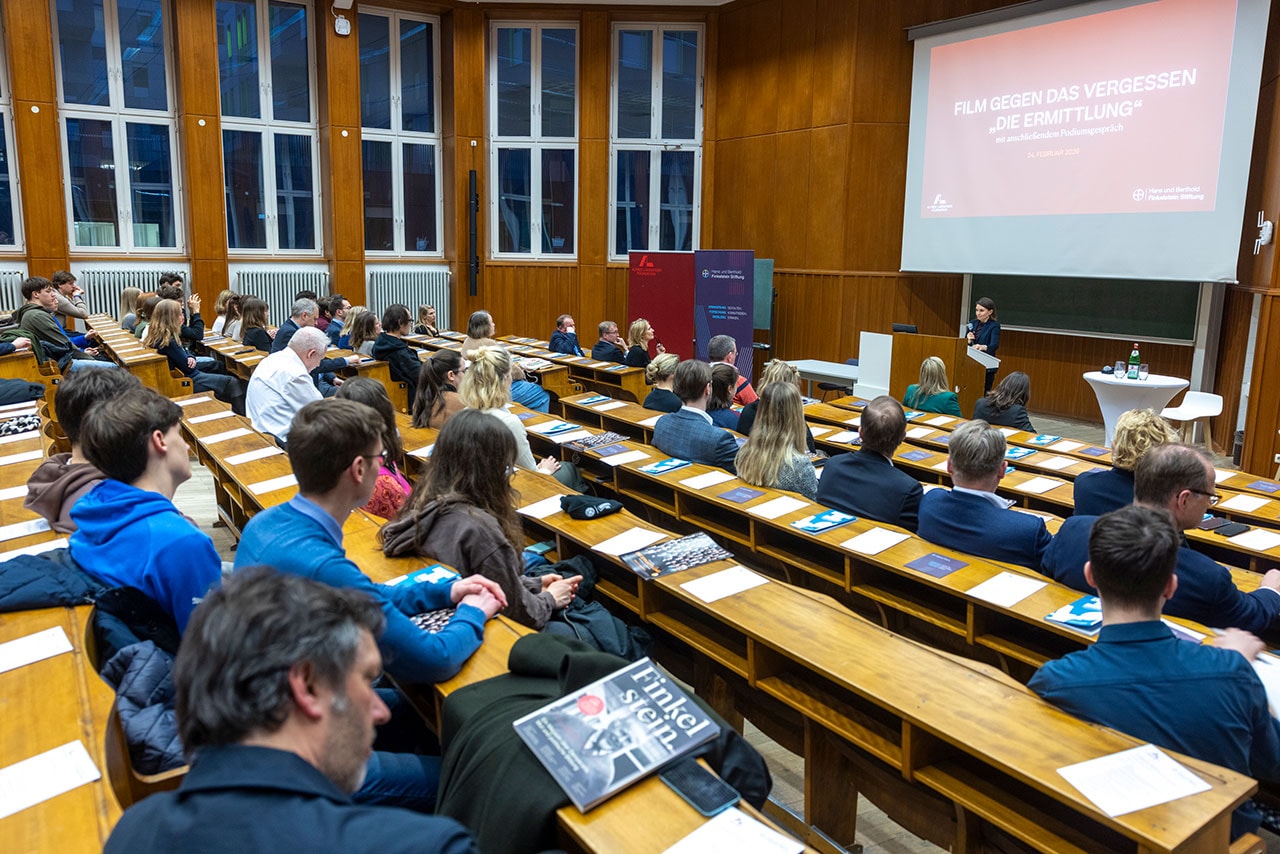
On February 24, under the title “Film Against Forgetting,” a public screening of the film “Die Ermittlung” took place in the historic Lecture Hall II at the University of Cologne. The film is based on the play of the same name by Peter Weiss and reconstructs key moments of the first Auschwitz trials (1963–1965).
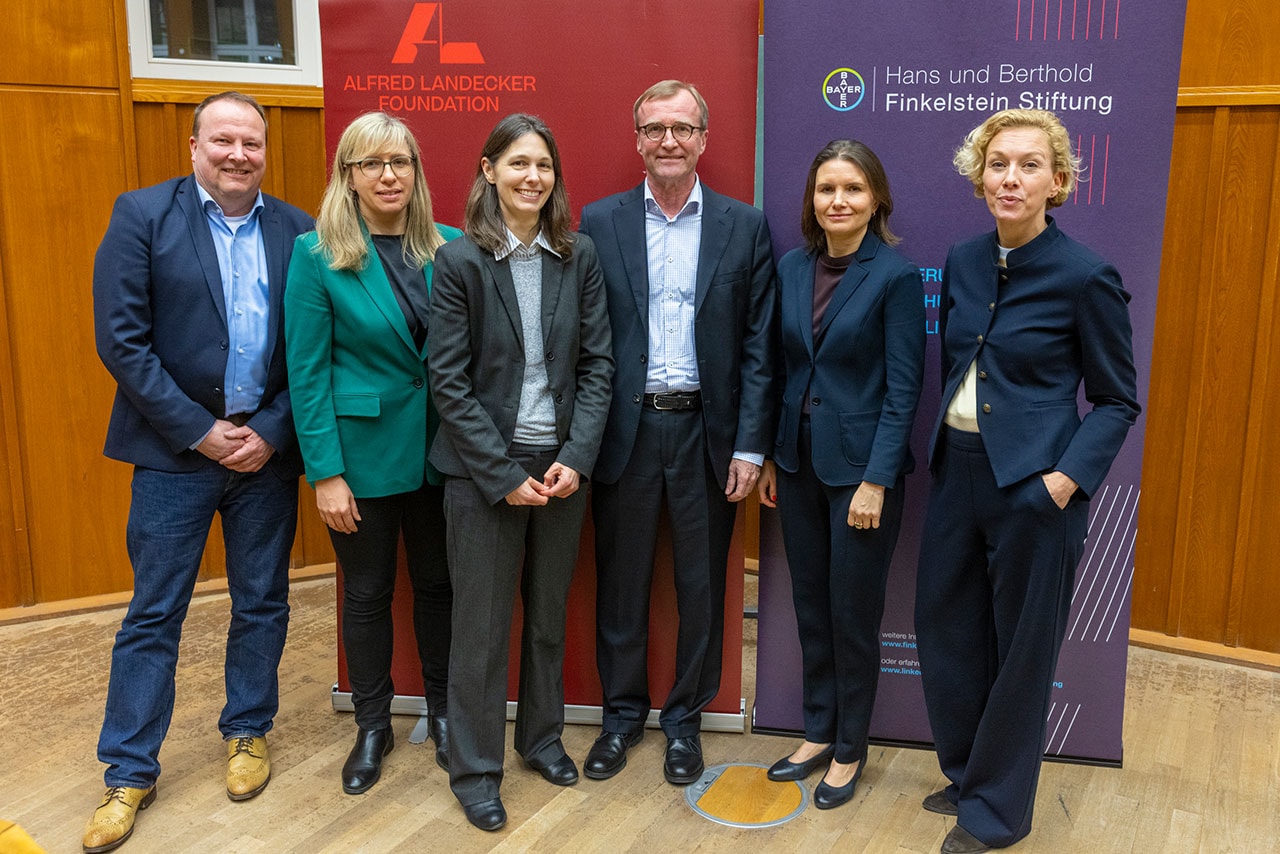
Dr. Stefan Lode, Annemarie Hühne-Ramm, Dr. Sara Berger, Prof. Dr. Hans-Peter Haferkamp, Lena Altman, Silke Mülherr © Michael Rennertz
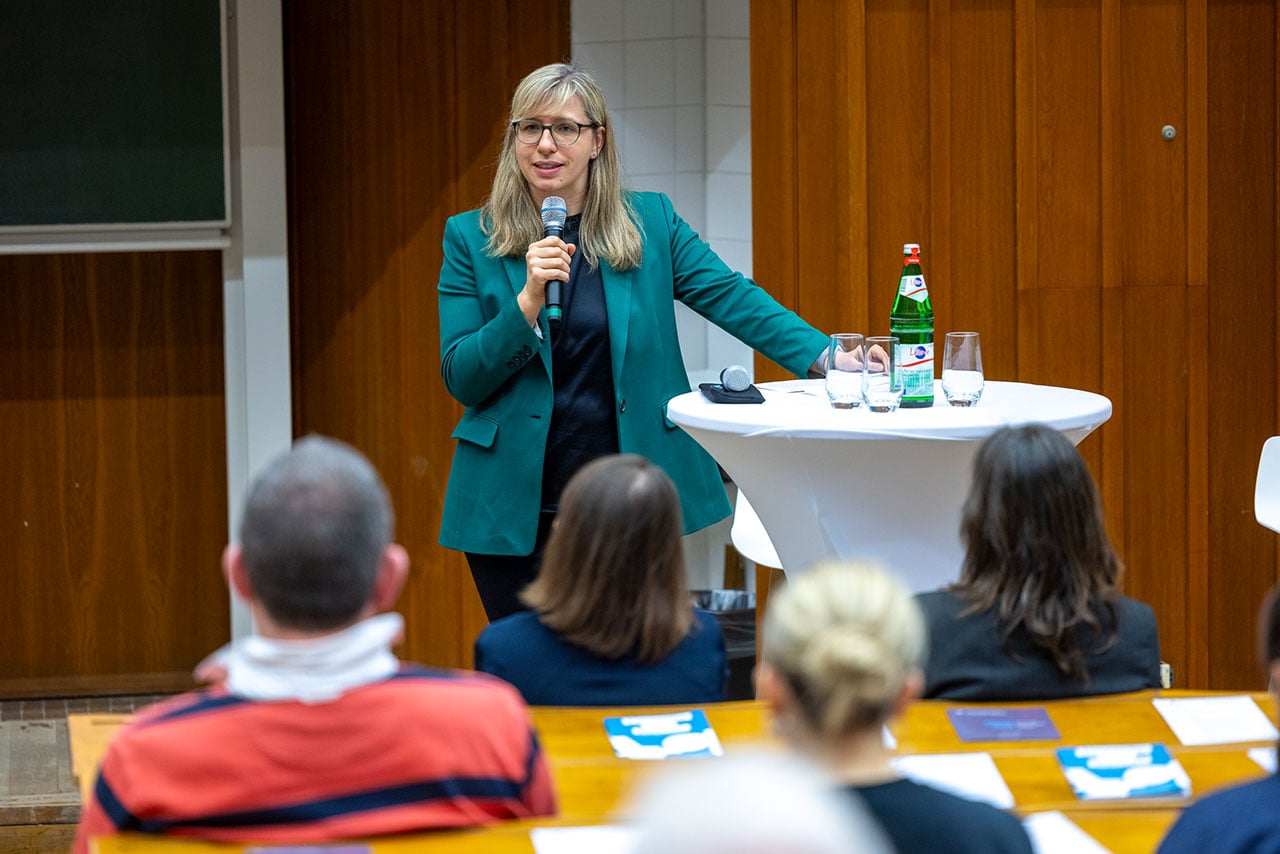
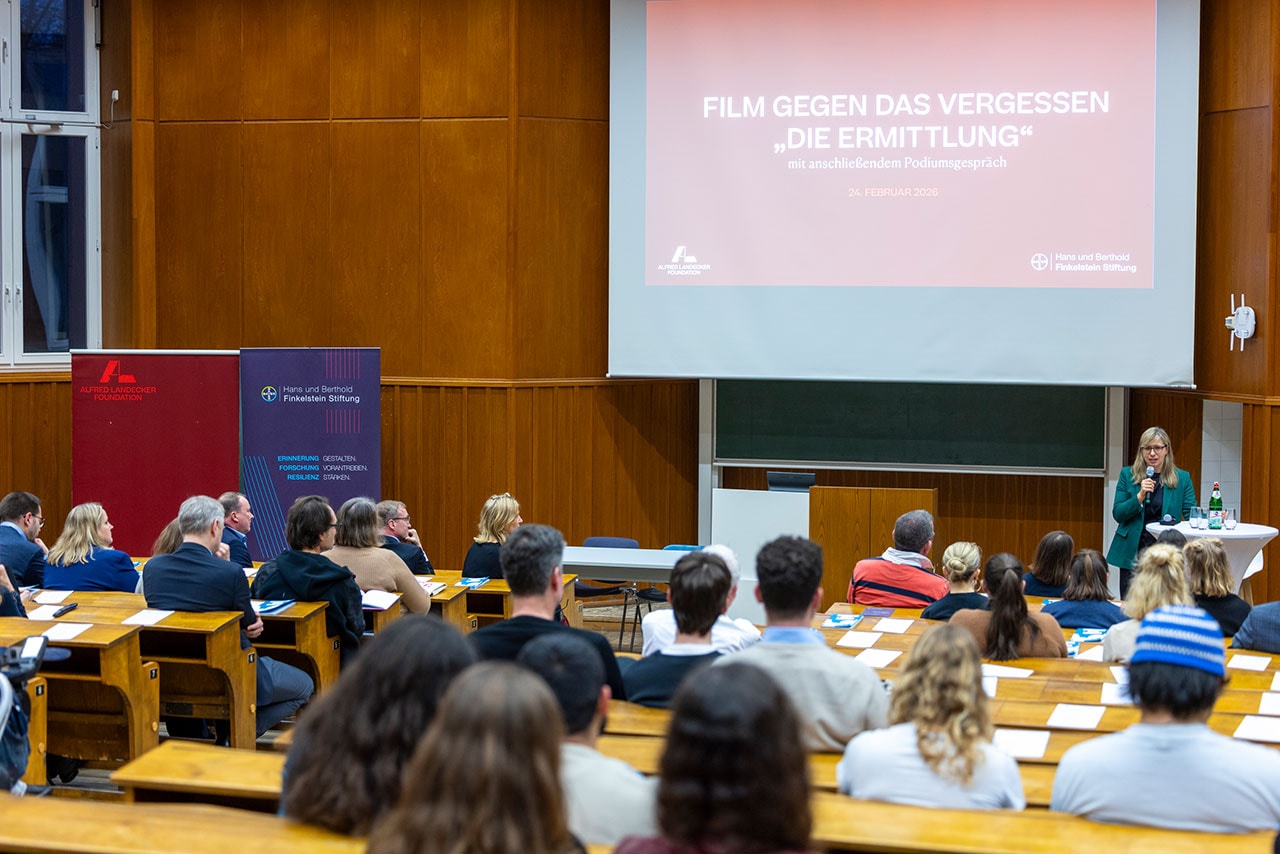
Lena Altman, Co-CEO of the Alfred Landecker Foundation, opened the event. She emphasized the significance of the trials, during which the organized extermination of European Jews was, for the first time, examined in detail before a German court. She quoted Fritz Bauer, who was then the Attorney General of the State of Hesse: “Coming to terms with our past means holding judgment over ourselves.”
The three excerpts shown from the film addressed different aspects of the trial: the ramp where the transports of people arrived at the camp, a particularly brutal SS sergeant, and finally the crematoria, where the bodies of the murdered were plundered and burned.
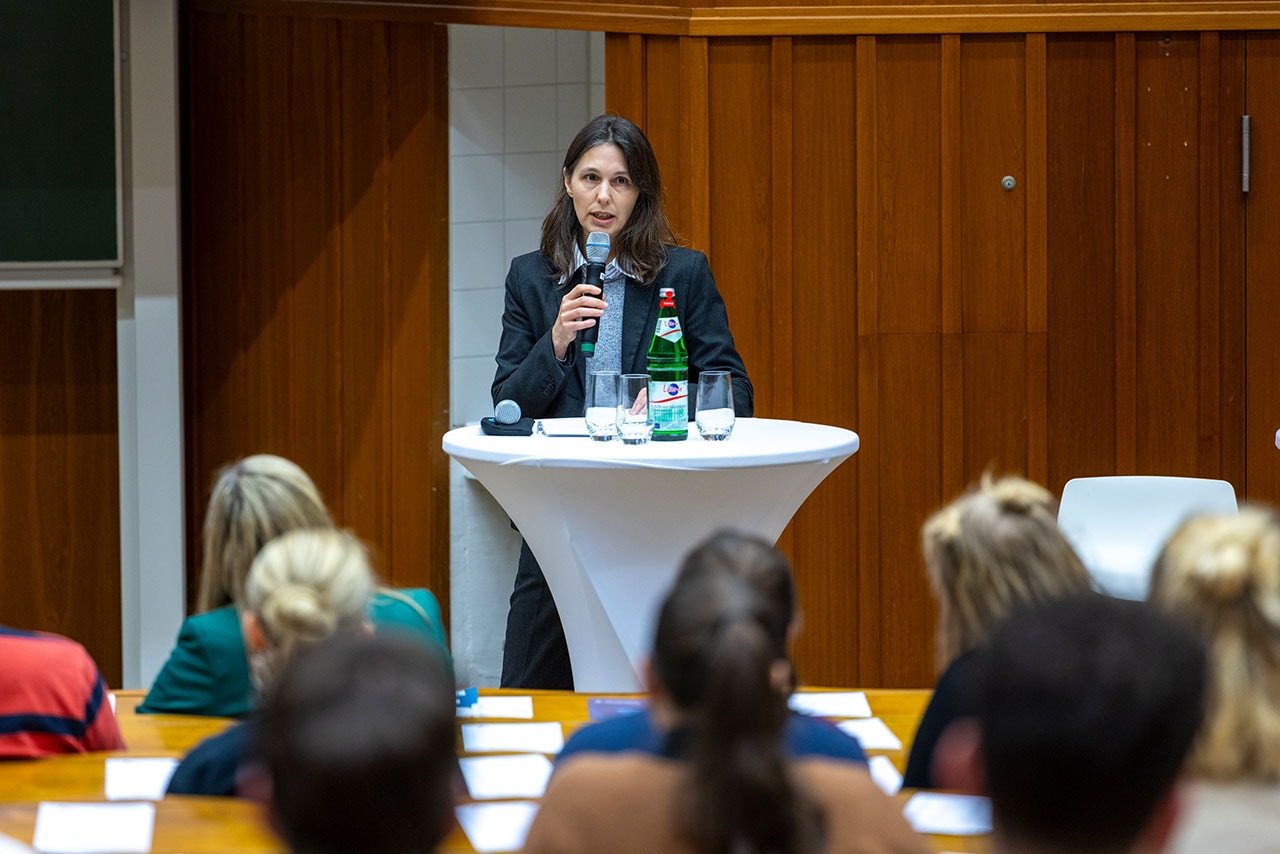
Dr. Sara Berger, historian and member of the advisory board of the Finkelstein Foundation, provided historical context after the screening. “The trial played a crucial role in ensuring that Auschwitz took a permanent place in the collective memory of the German population,” she explained. Fritz Bauer aimed to use the accused to expose the system of organized mass murder in Auschwitz and compel Germans to confront their own history.
© Michael Rennertz
© Michael Rennertz
© Michael Rennertz
© Michael Rennertz
© Michael Rennertz
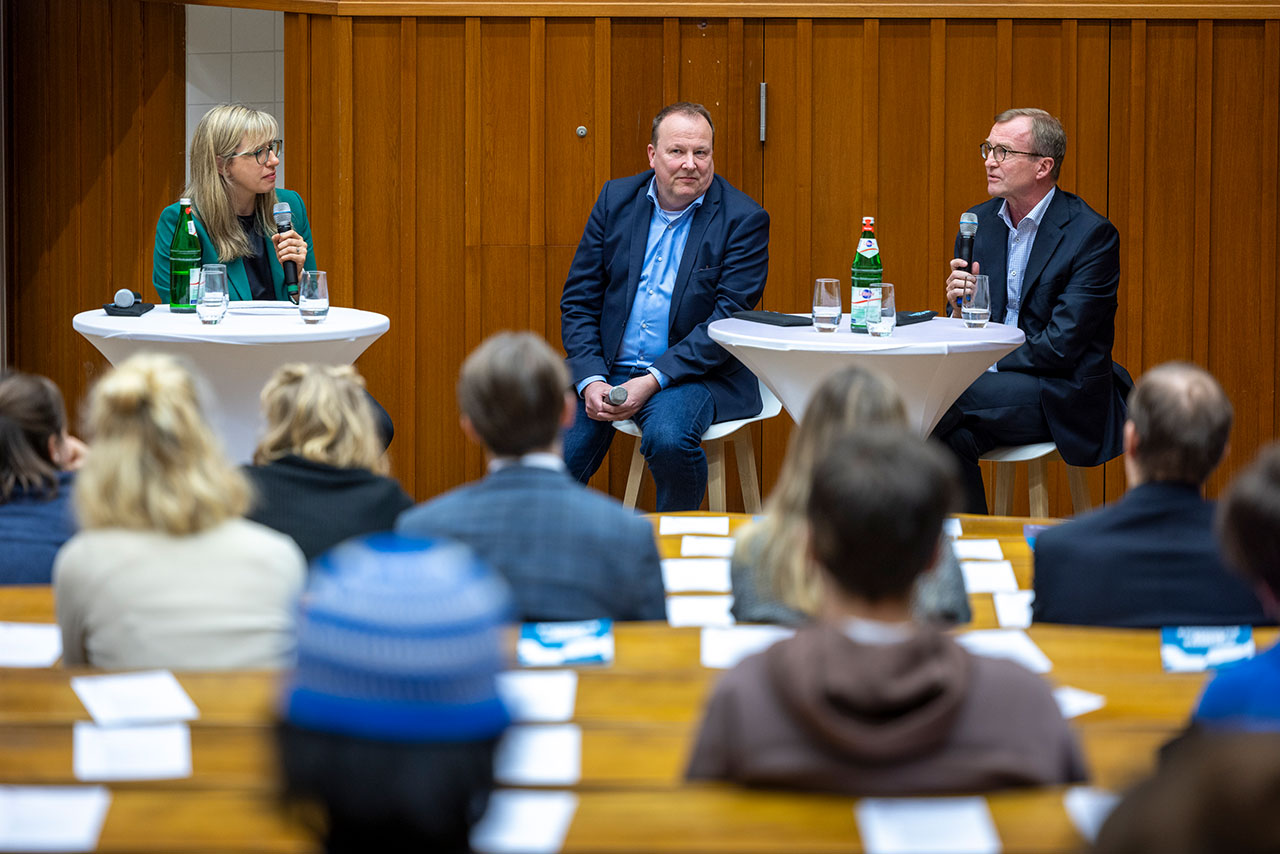
Following the screening, Annemarie Hühne-Ramm, legal historian Prof. Dr. Hans-Peter Haferkamp, and attorney Dr. Stefan Lode discussed the relevance of these trials for contemporary legal thought and society’s ongoing responsibility to remember.
“Criminal law was developed in the 19th century as a safeguard against state arbitrariness. For a time that legitimized the gravest injustices through laws or orders, such a legal system is ill-suited,” said Professor Haferkamp. In his lectures, he engages deeply with his students on the Nazi era and the crimes that masqueraded as law. This is also a personal concern for him: “My grandfather was in the SS. That is the trauma of my family.”
Dr. Stefan Lode represented several Holocaust survivors who appeared as joint plaintiffs in the final Nazi trials. For most of them, punishment of the perpetrators was not the main motive: “Almost all came from abroad—from the United States, Israel, or Canada—because they wanted to tell their story one more time.” It was also important to the survivors to have a court reaffirm that even a desk job in a concentration camp constituted complicity in murder.
The presumably last Nazi trial - against a former secretary of the Stutthof concentration camp -concluded in August 2024. Nevertheless, all speakers emphasized that remembrance and confrontation with the past must never come to an end.