"Kornblumenblau" Captivating Finkelstein Lecture in Berlin
On May 7, a public event with author and journalist Susanne Beyer took place at the Bayer site in Berlin. During her reading from her book and the subsequent conversation with Annemarie Hühne-Ramm, the journalist took the audience on a journey to uncover clues about her family history.
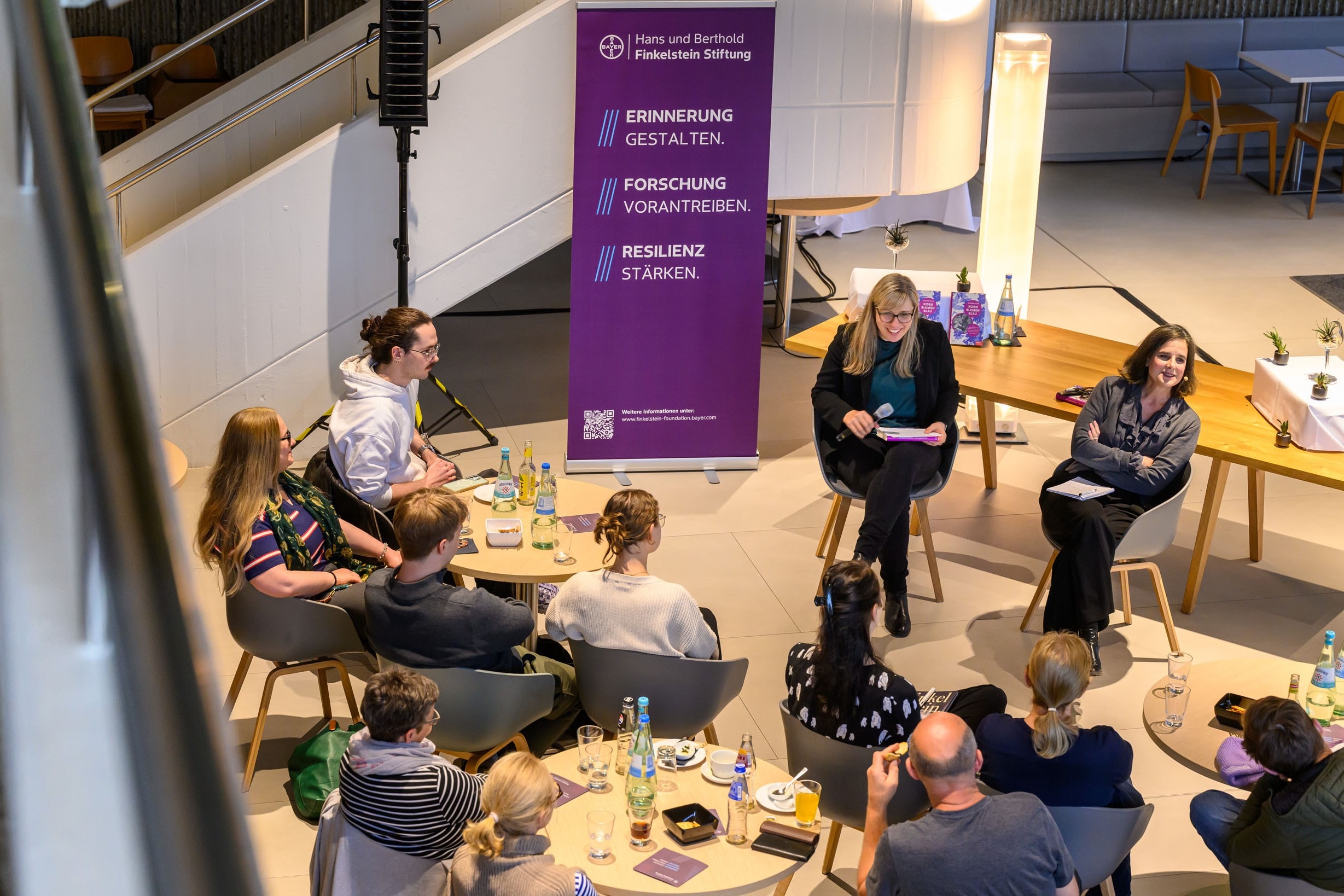
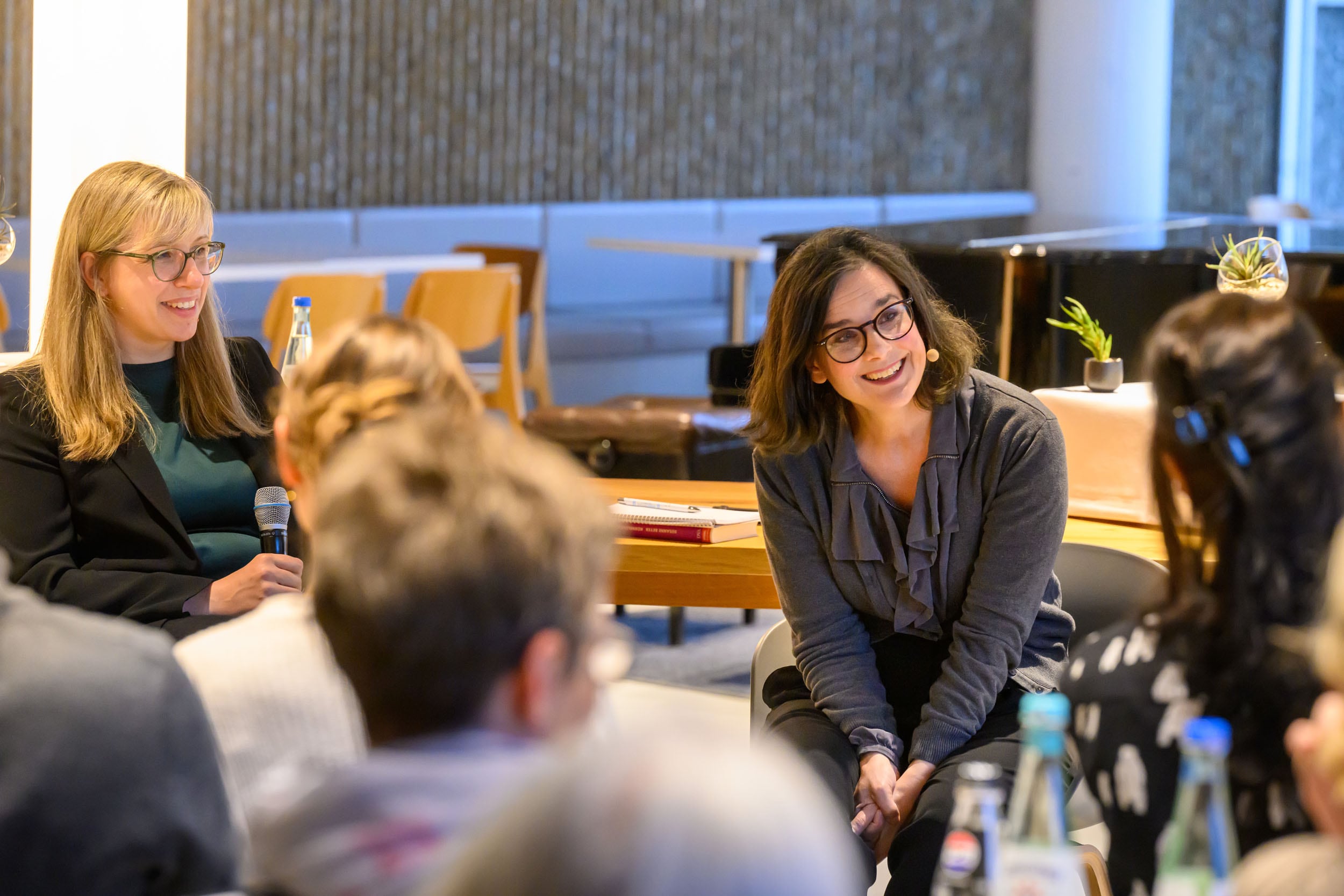
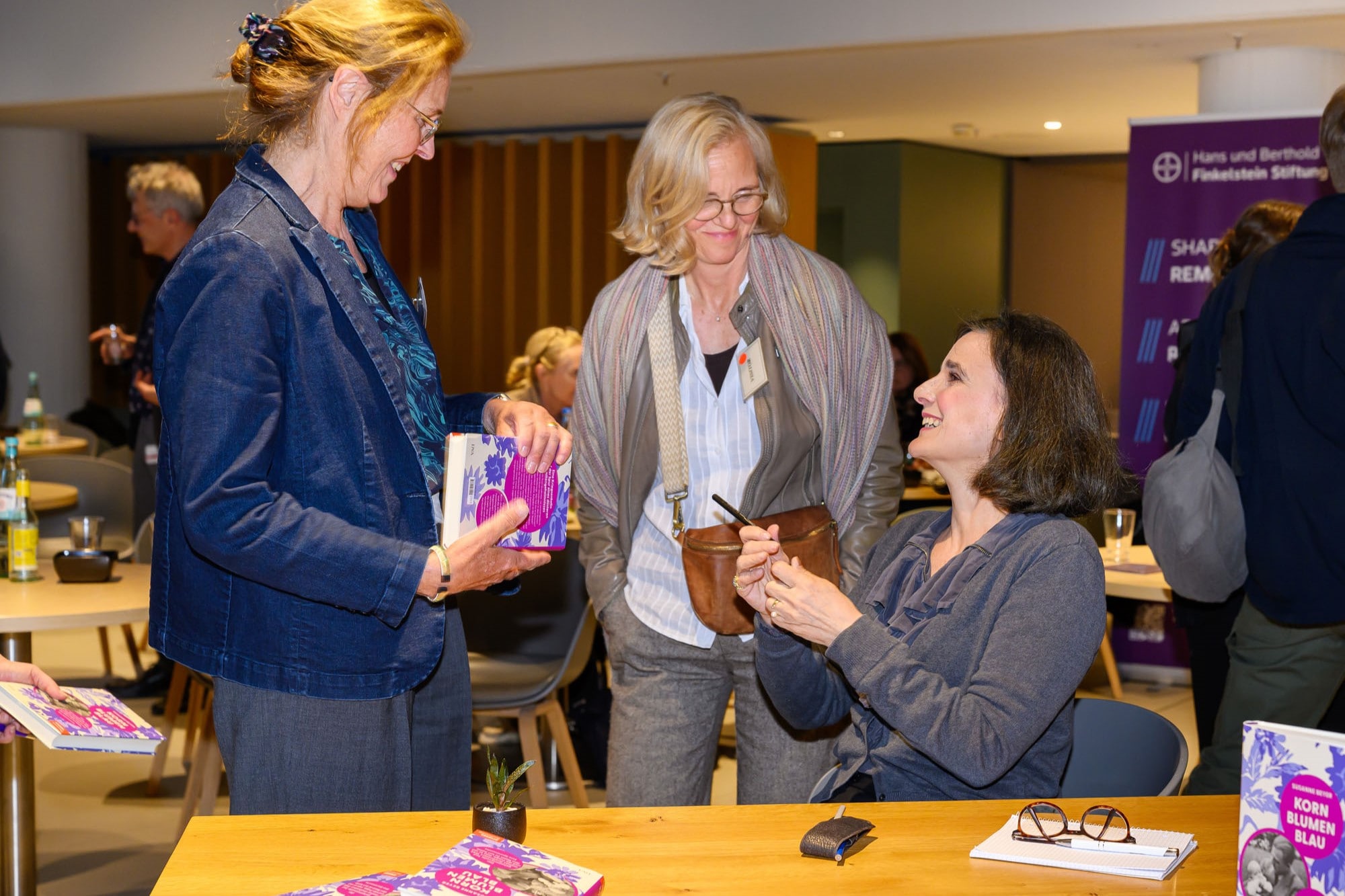
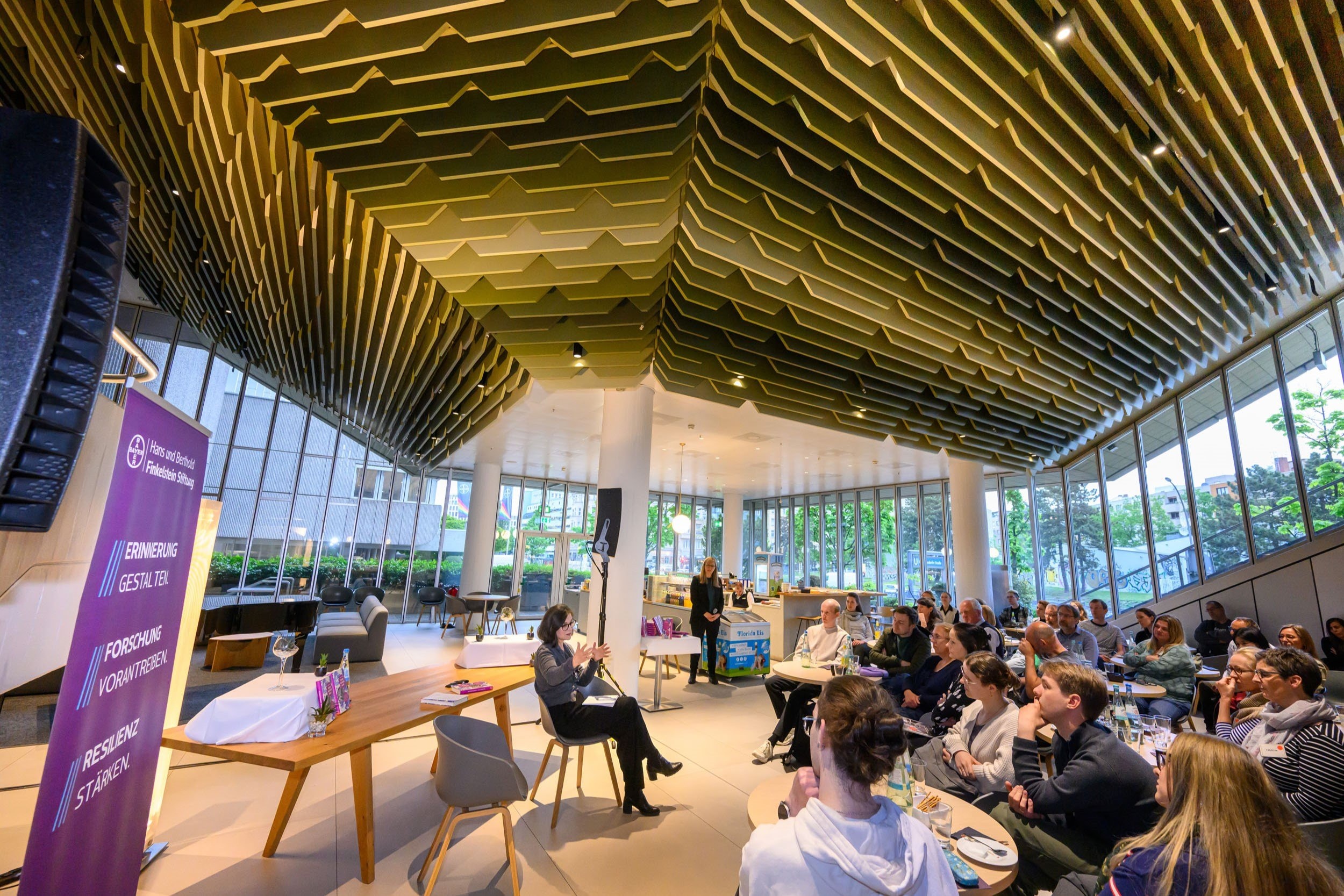
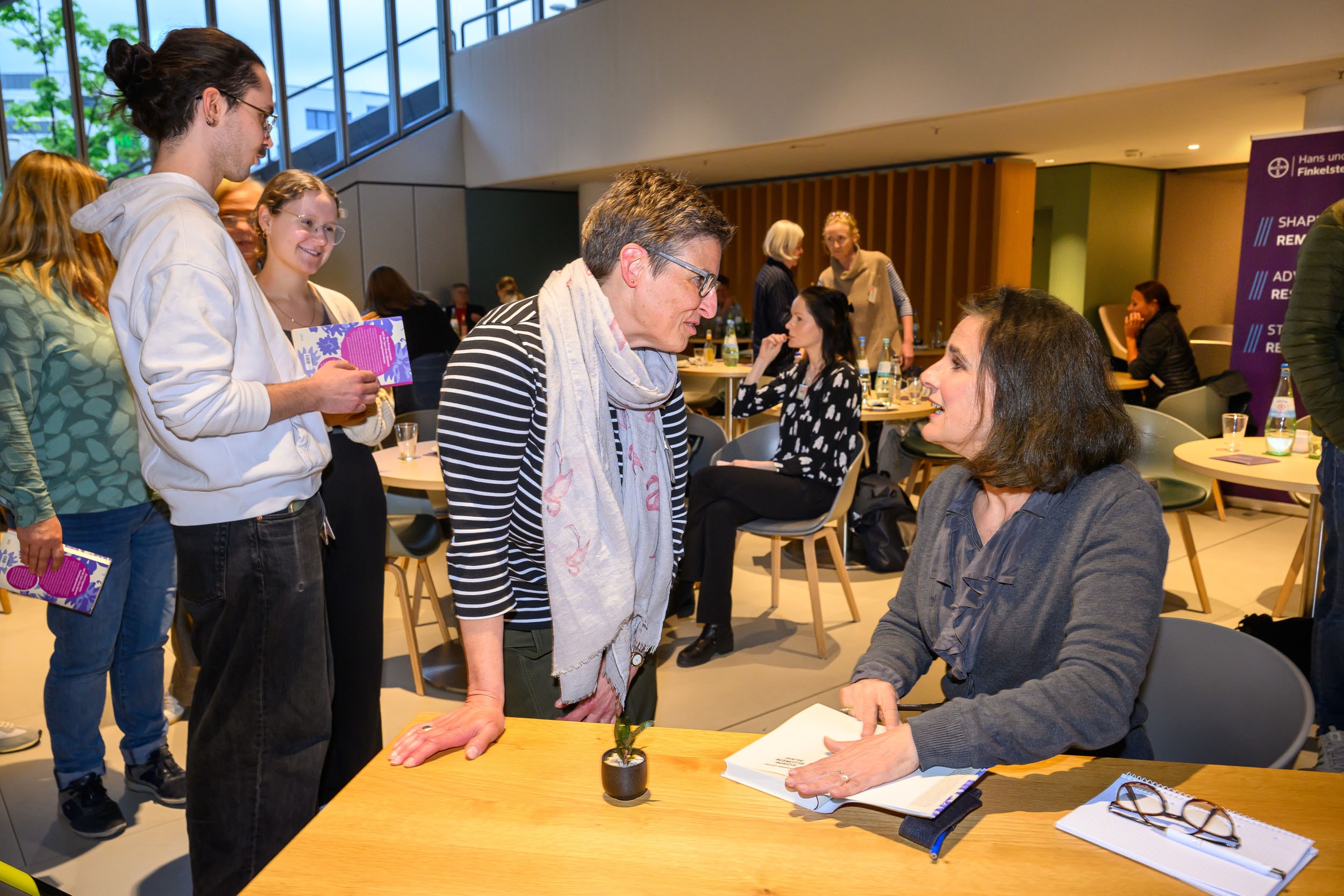
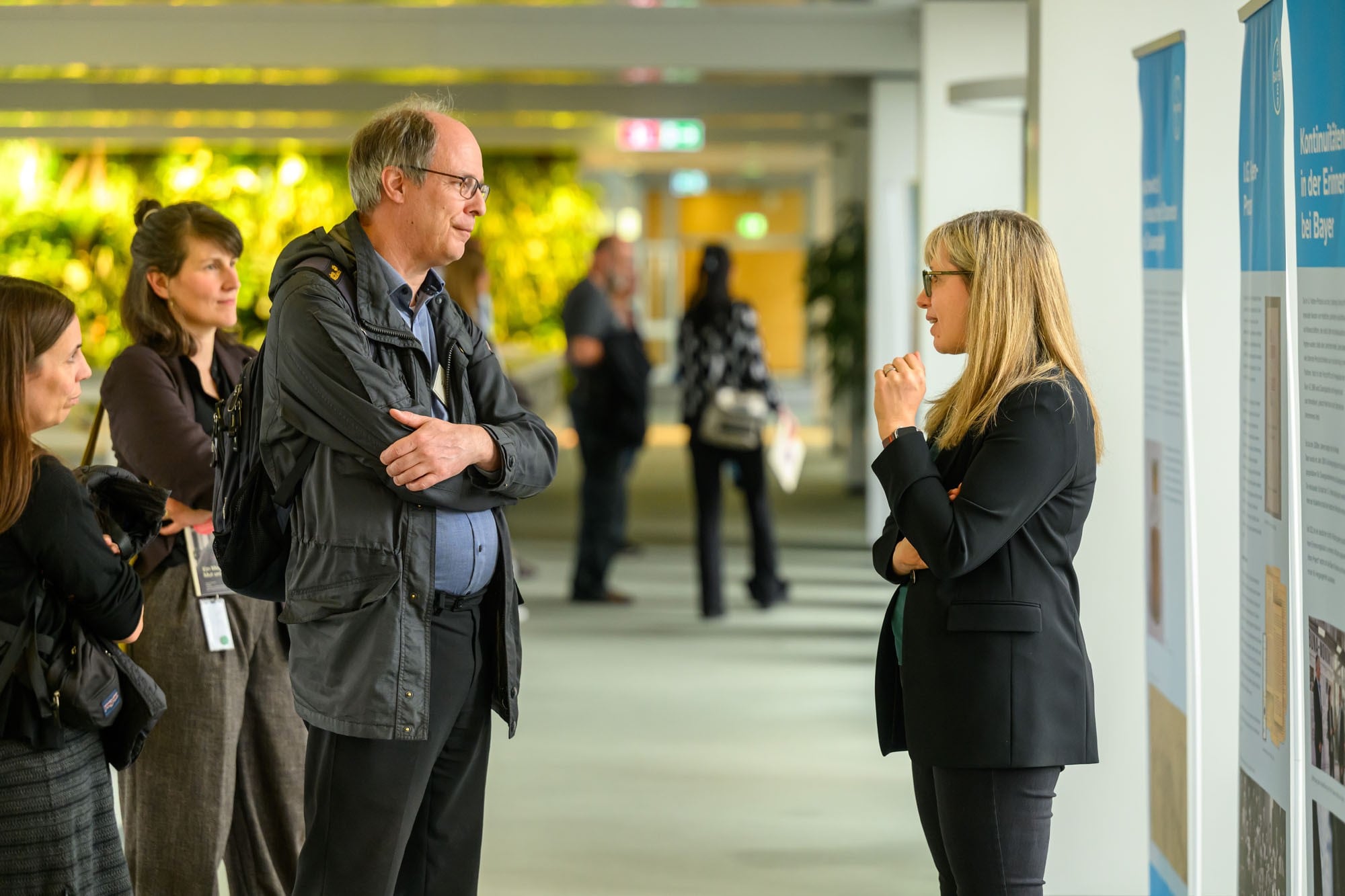
Annemarie Hühne-Ramm, director of the Finkelstein Foundation, opened the event with a few words about the foundation’s work. Regarding the historical reappraisal of the Nazi past of I.G. Farbenindustrie AG, she said: “As the largest chemical company of its time, entangled in forced labor, war production, and the concentration camp system—but also with a long continuity at Bayer after the war—we are finding different ways to grapple with its history and draw lessons for the present and the future.”
Among other subjects, she addressed the exhibition on the history of I.G. Farben, which was jointly conceived by the Finkelstein Foundation and the Bayer Archive and was most recently on display at Bayer AG’s Berlin location. Earlier that evening, guests of the Finkelstein Lecture had the opportunity to view the exhibition and take part in a guided tour.
The author read four passages from her book and took the guests through the stages of her research process. The more clues she found about her grandfather’s life and the circumstances of his death, the more she had to question the decades-old family narratives that recalled him as someone who was “not a Nazi.” As she dug deeper, the entanglements between the chemical industry, particularly I.G. Farben, and the Nazi regime struck her as too significant to ignore. Susanne Beyer’s book “Kornblumenblau” also serves as a guide on how to conduct such research oneself.
Annemarie Hühne-Ramm emphasized the importance of researching one’s own family history. Only in this way can one begin to understand how their own (great)grandparents behaved during the Nazi era - whether they profited from the criminal regime or perhaps even collaborated with it - and explore questions about one’s own identity.
At the end, the audience directed many interested questions to Susanne Beyer and Annemarie Hühne-Ramm. The evening concluded with a lively discussion about the complex emotional and psychological implications of confronting the Nazi past within one’s own family history. It became clear that such research can be unsettling and may challenge previously held truths, yet it is also deeply rewarding, as the search for truth can at the same time connect us more deeply with ourselves and our families.