Nazi Slave Labour: Perpetrators and Victims
Exhibition at the Wiener Holocaust Library (May 20 – October 30, 2026) in London
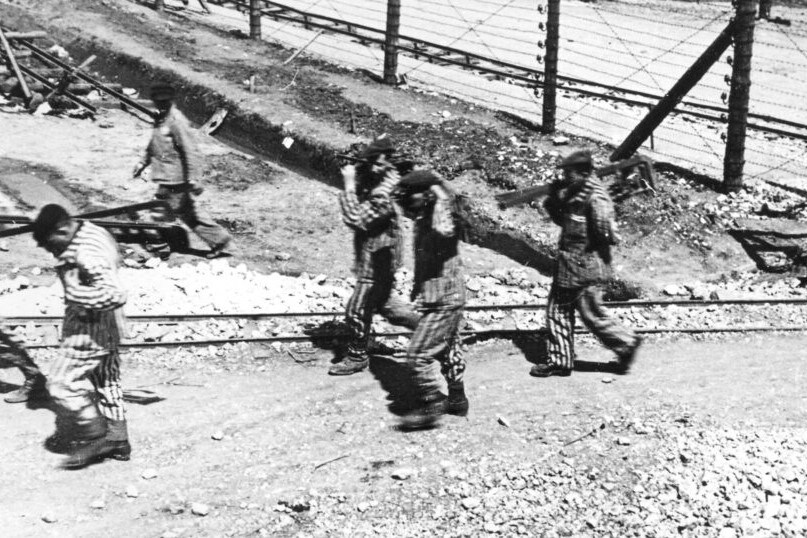
Jewish forced labourers in Kraków-Płaszów camp in German-occupied Poland, c. 1942/3. Wiener Holocaust Library collections.
Between 1939 and 1945, around 20 million people were exploited by the Nazi regime as forced and slave labourers. The Wiener Holocaust Library’s new exhibition, “Nazi Slave Labor: Perpetrators and Victims,” explores the extent of the violence and presents the perspectives of both perpetrators and victims.
The exhibition examines the wide spectrum of Nazi forced labour: Jewish labourers in ghettos and concentration camps, civilian workers from occupied territories, and prisoners of war. Two and a half million forced labourers did not survive. Companies such as I.G. Farben and Krupp directly profited from this exploitation, ordering concentration camp prisoners from the SS and subjecting them to life‑threatening working conditions.
Drawing on rare photographs, clandestine images taken by forced labourers, eyewitness testimonies, and corporate documents, the exhibition offers deep insights into the mechanisms of exploitation. It also features, for the first time, contemporary portrait photographs by Mike Stone, depicting survivors of Nazi slave labour and making their histories visible.
The exhibition illustrates how far the network of Nazi forced labour extended—from agriculture and chemical production to major construction projects such as the Atlantic defences—and underscores the responsibility of the institutions and companies involved. Visitors gain a comprehensive understanding of the victims’ lived realities and the systemic nature of their persecution.
Further information is available on the Wiener Holocaust Library’s website. Media enquiries can be directed to the institution’s press office.