New permanent exhibition at Villa Merländer opens
Finkelstein Foundation supports exhibition space on forced labor
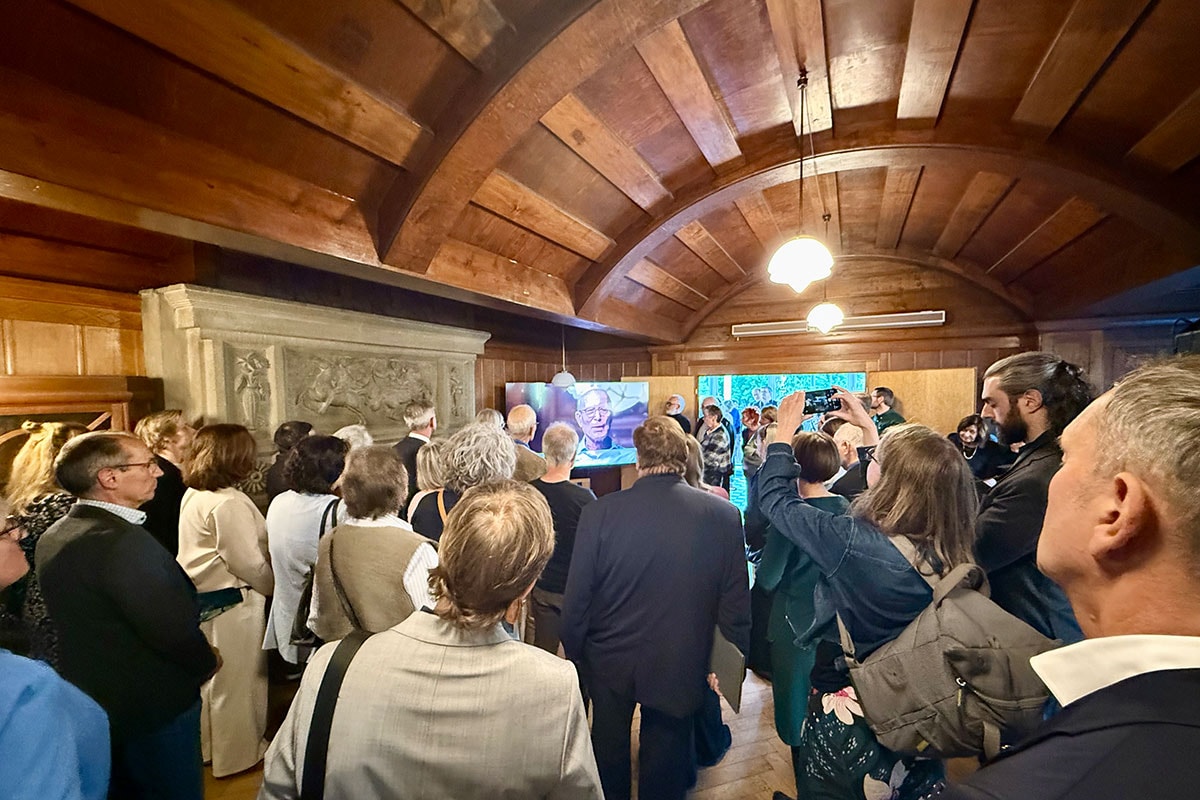
18 May, Villa Merländer in Krefeld opened its new permanent exhibition. The city’s NS Documentation Center has presented its history in a thoroughly revised form. At the heart of the exhibition are the fates of people who were persecuted, disenfranchised, and murdered under Nazi rule.
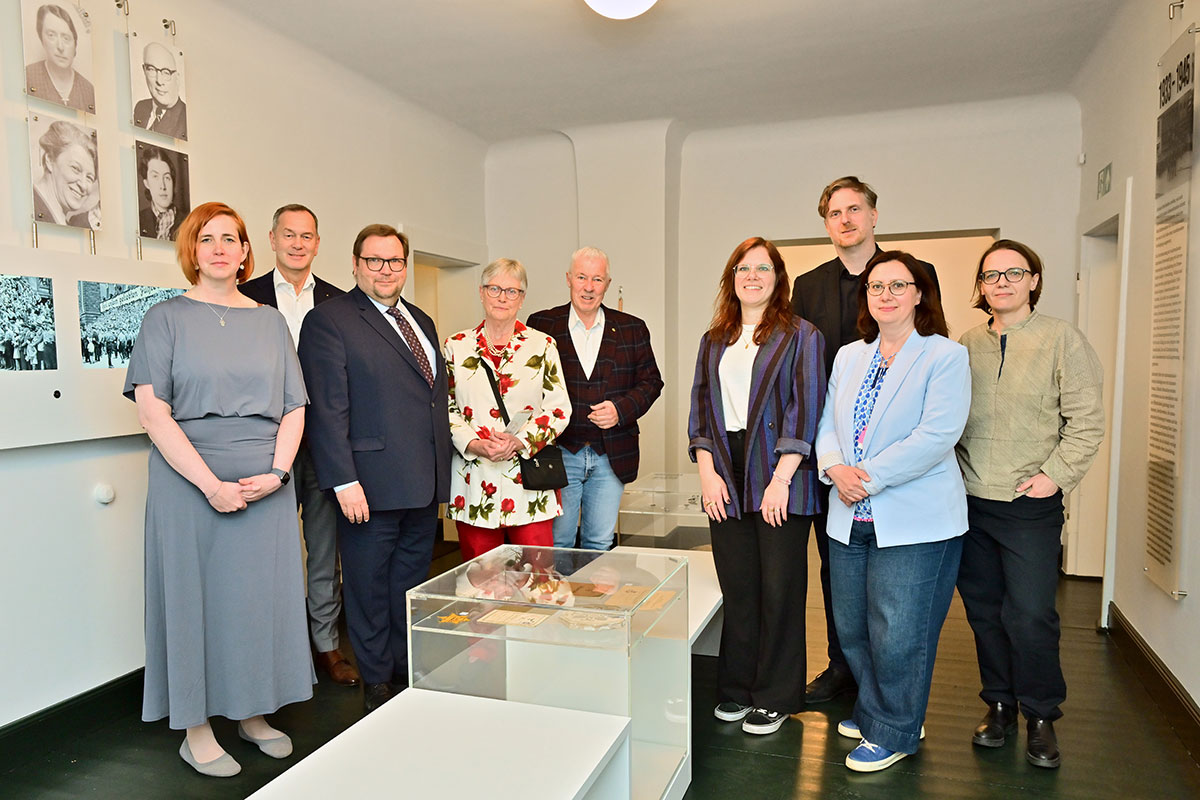
Mayor Frank Meyer, the team of Villa Merländer, and the supporters at the opening in Krefeld. © Villa Merländer
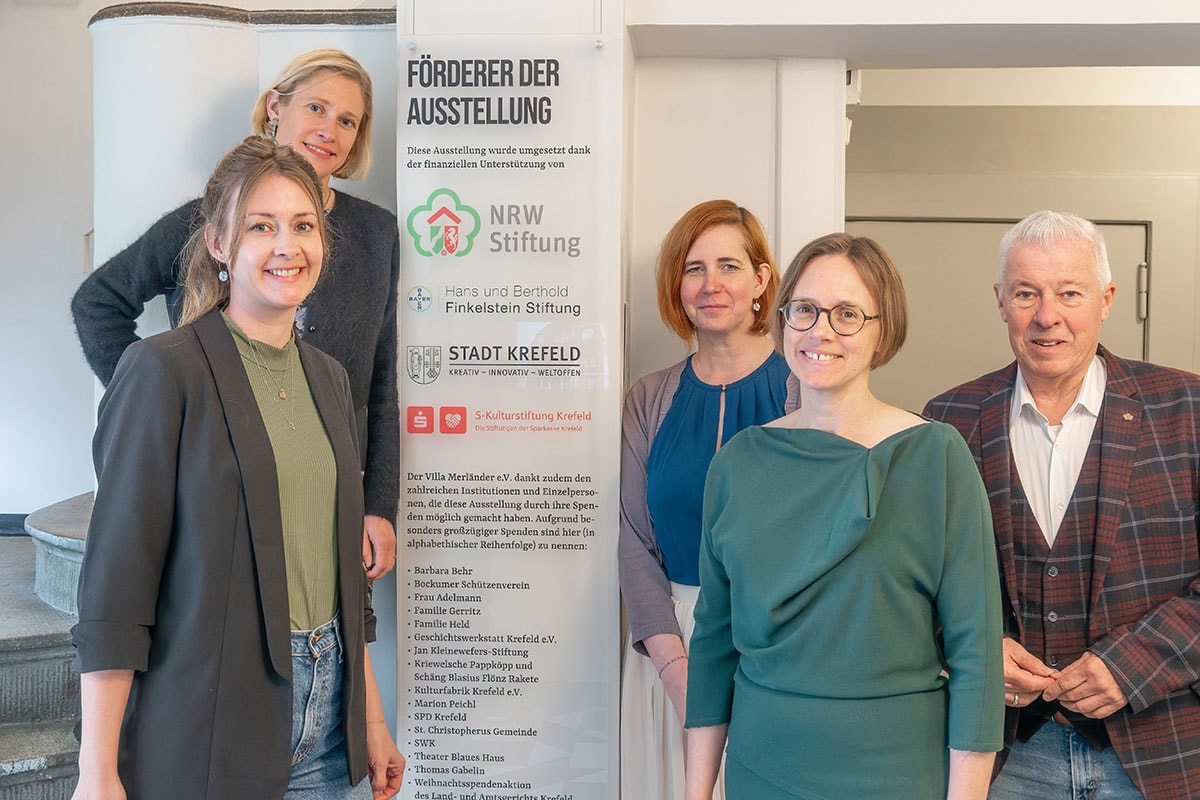
The Finkelstein Foundation supported the exhibition space dedicated to nazi forced labor. “Nearly 80 years after the end of the Second World War, there are hardly any people left who can speak from their own experience about the Nazi era,” says Annemarie Hühne-Ramm, Director of the Finkelstein Foundation. “That makes places all the more important that convey historical contexts and make individual fates visible. It was important to us to support the presentation and research of the history of forced labor under National Socialism at the local level, because this subject still receives too little attention in remembrance culture and highlights an important dimension of participation in Nazi crimes.”
© Villa Merländer
The new exhibition tells the history of National Socialism from a Krefeld perspective. Its starting point is the biography of the Jewish silk merchant Richard Merländer, who built the villa and was deported and murdered in 1942. Other focal points include the persecution of homosexual people, the denunciation of modern art as “degenerate,” and forced labor during the war.
The exhibition combines historical documents, personal biographies, objects, and digital media. Its content can be expanded in the future as new research findings or sources become available, keeping it open to new perspectives and insights.
Historical links to Krefeld and the Finkelstein family’s history
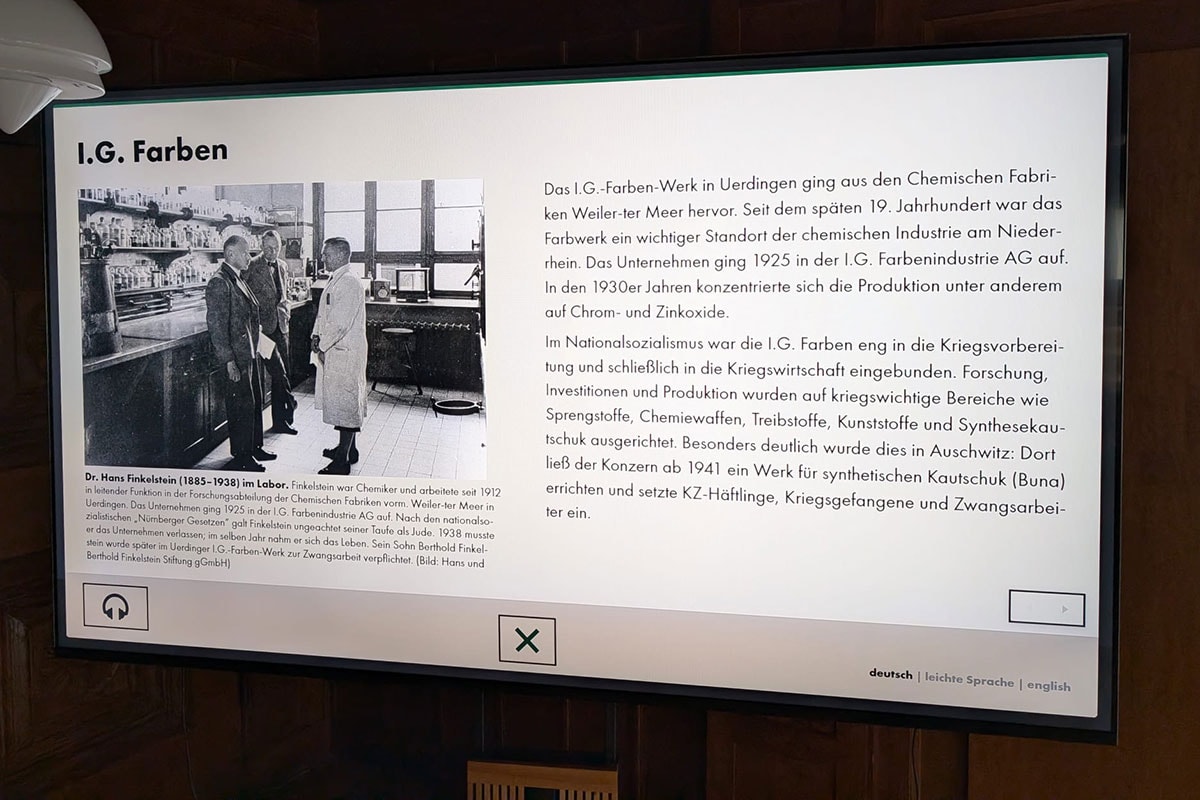
Exhibition space on the topic of Nazi forced labor in the permanent exhibition. © Villa Merländer
The connections between the Finkelstein Foundation, the city of Krefeld, and Villa Merländer are closely intertwined in historical, institutional, and remembrance-culture terms. Krefeld-Uerdingen was one of the four Lower Rhine sites of I.G. Farben. Around 3,000 people were forced to work there.
© Villa Merländer
The support for the exhibition space also connects to the history of the Finkelstein family. Hans Finkelstein was a senior scientist and chemist at the former I.G. Farben plant in Uerdingen. As a man of Jewish heritage, he was persecuted after the National Socialists seized power and pushed out of his professional environment. His son Berthold shared the family’s fate and had to perform forced labor at his father’s plant.
In recent years, Villa Merländer and the Finkelstein Foundation have already collaborated on events related to local remembrance culture. Supporting the new permanent exhibition continues that commitment.